

- This event has passed.
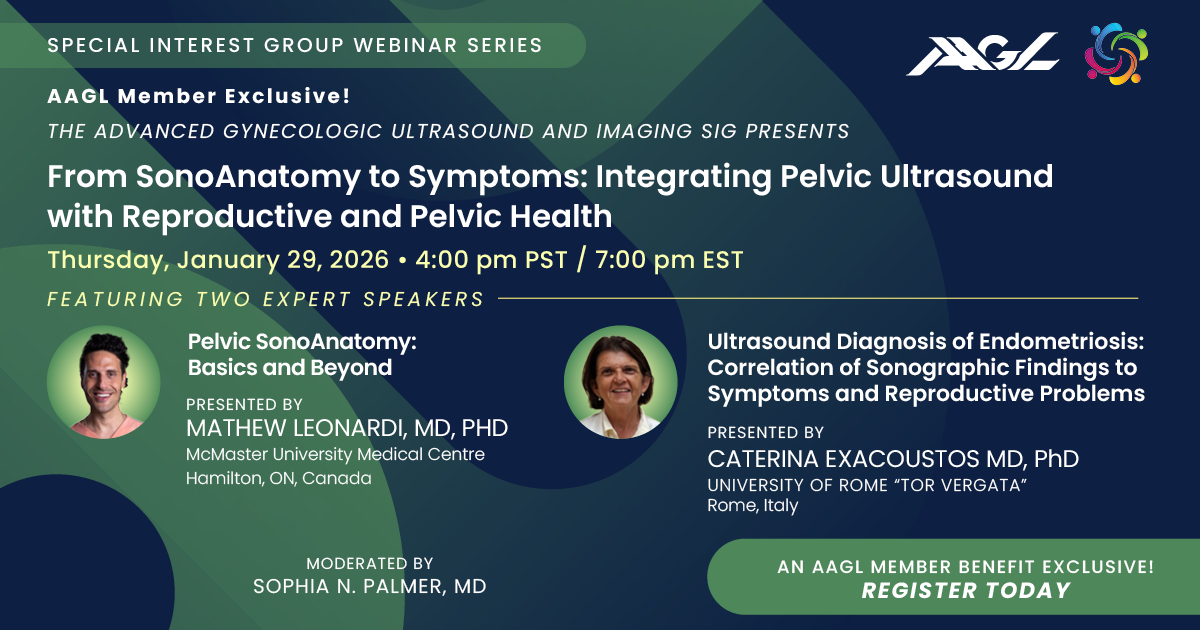
AAGL Advanced Gynecologic Ultrasound and Imaging SIG Webinar: From SonoAnatomy to Symptoms: Integrating Pelvic Ultrasound with Reproductive and Pelvic Health
AAGL SIG Webinars Are Now Membership Exclusive:
Starting in 2026, AAGL’s Special Interest Group (SIG) Webinars are exclusive for AAGL Members only. You can register for multiple webinars including webinars that have not yet been scheduled. The system will send you an update once we have a confirmed dates and times.
Please click here to register for this webinar and to review the webinars’ topics and months offered and register.
AAGL Advanced Gynecologic Ultrasound and Imaging SIG Webinar:
Webinar Topic: From SonoAnatomy to Symptoms: Integrating Pelvic Ultrasound with Reproductive and Pelvic Health
Presented by:
Mathew Leonardi, MD, PhD, McMaster University Medical Centre, Hamilton, Ontario, Canada
Topic Title: Pelvic SonoAnatomy: Basics and Beyond
Caterina Exacoustos, MD, PhD, University of Rome “Tor Vergata”, Rome, Italy
Topic Title: Ultrasound Diagnosis of Endometriosis: Correlation of Sonographic Findings to Symptoms and Reproductive Problems
Moderated by:
Sophia N. Palmer, MD
Webinar Description: Most MIGS surgeons rely on ultrasound reports rather than the images themselves, yet high quality pelvic surgery increasingly demands a working knowledge of pelvic sonoanatomy. This webinar will provide a practical, surgeon focused overview of gynecologic and adjacent pelvic structures on transvaginal ultrasound, including bowel, bladder, ureters, and other non gynecologic sites relevant to endometriosis and chronic pelvic pain. Building on this anatomical foundation, we will then explore how specific sonographic findings correlate with symptoms, function, and reproductive outcomes across common pelvic conditions. Attendees will leave with a stronger mental map of the pelvis on ultrasound and a glimpse of what is coming next in advanced pelvic imaging, including pelvic floor muscles, nerves, and vascularity.
Webinar Course Objective(s):
1. Identify key transvaginal ultrasound landmarks of normal pelvic sonoanatomy, including uterus, ovaries, adnexa, and surrounding pelvic compartments.
2. Recognize adjacent non-gynecologic pelvic structures on ultrasound, such as bowel, bladder, and ureters, that are commonly involved in endometriosis and chronic pelvic pain.
3. Outline emerging applications of advanced pelvic imaging, including pelvic floor muscles, nerves, and vascularity, and describe how these may inform future MIGS practice.
4. Correlate specific sonographic findings in common pelvic conditions with patient-reported symptoms, functional impact, and patterns of pelvic pain.
5. Relate pelvic ultrasound findings to reproductive outcomes and counseling, including implications for fertility and surgical decision-making.